
Front End Developer Job Description: Free Template Generator
05 March 2026
452 views
This article is up to date as of October 2026

Written by
Michael Reynolds,
Senior JavaScript Developer

Reviewed by
Maya Desai,
Senior JavaScript Engineer
In today’s digital economy, companies depend heavily on user-friendly web interfaces that deliver speed, clarity, and seamless interaction. Behind every modern website or web application stands a frontend developer responsible for building the visual and interactive parts of the product. Because this role has become essential in modern product teams, organizations need a clear and accurate front end developer job description that explains what the position involves, what skills are required, and what responsibilities the developer will handle.
A well-structured job description helps both employers and candidates understand expectations before the hiring process even begins. For employers, it serves as a guideline for evaluating candidates and defining the scope of the role within a development team. For developers, it clarifies what technical skills, tools, and experience are expected in real production environments. Without a precise description, companies often attract candidates whose expertise does not match the requirements of the project.
A strong job description does more than list technologies like HTML, CSS, and JavaScript. It explains how the developer contributes to building responsive interfaces, implementing UI designs, collaborating with backend engineers, and maintaining performance across devices and browsers. In modern teams, frontend developers also participate in design discussions, optimize user experience, and maintain reusable component architectures. Understanding how a professional front end developer job description is structured helps companies hire the right talent and helps developers prepare for real-world responsibilities in modern web development teams.
What Is Front End Web Developer Job Description?
A front end web developer job description explains the role, responsibilities, and technical expectations associated with building the visual layer of modern web applications. It defines what a frontend developer is responsible for inside a development team and outlines the skills required to implement user interfaces that function efficiently across browsers and devices. Companies use this description when hiring developers to ensure that candidates clearly understand the scope of the role and the technologies involved. At its core, a frontend developer focuses on the part of the application that users directly interact with. This includes implementing layouts, interactive elements, animations, and responsive design structures using technologies such as HTML, CSS, and JavaScript. However, modern frontend development goes far beyond simple page layouts. Developers work with component-based architectures, frontend frameworks, performance optimization techniques, and accessibility standards to ensure that applications remain usable and scalable.
A professional job description also reflects the collaborative nature of modern product teams.
Frontend developers regularly work with UI/UX designers, backend engineers, product managers, and QA specialists. They translate visual designs into functional code, integrate APIs provided by backend services, and ensure that applications behave consistently across different browsers and devices. Because of this, the role requires both strong technical skills and an understanding of product design and user experience. Another important aspect of the role involves maintaining code quality and long-term maintainability. Frontend developers often build reusable UI components, follow coding standards, and use version control systems to manage collaborative development. As applications grow, they also contribute to performance improvements, debugging, and testing processes.
Skills Usually Listed in a Front End Developer Position Description
| Skill | Description |
| HTML5 and Semantic Markup | Ability to structure web content using semantic HTML elements that improve accessibility, SEO, and maintainable page architecture. |
| CSS and Responsive Design | Skills for building adaptive layouts using modern CSS techniques such as Flexbox, Grid, and mobile-first design principles. |
| JavaScript and DOM Manipulation | Proficiency in JavaScript for creating dynamic interfaces, handling events, managing state, and manipulating browser DOM structures. |
| Frontend Frameworks | Experience with frameworks such as React, Vue, or Angular used for building scalable component-based web applications. |
| Version Control (Git) | Ability to manage code changes, collaborate with teams, and maintain project history using Git and platforms like GitHub. |
| Browser Debugging and Developer Tools | Knowledge of browser developer tools for debugging layout issues, analyzing performance, and troubleshooting JavaScript errors. |
Main Responsibilities in a Front End Developer Job Description
A well-defined front end web developer job description clearly outlines the responsibilities developers handle when building the user-facing side of web applications. Modern frontend developers do much more than simply write HTML and CSS. They are responsible for translating design concepts into functional interfaces, ensuring smooth interaction between the user interface and backend services, and maintaining consistent performance across different devices and browsers.
One of the main goals of a frontend developer is to create intuitive and responsive user interfaces that provide a smooth experience for users. This involves implementing layouts, interactive elements, and navigation structures based on design specifications. Developers must ensure that applications remain accessible, visually consistent, and functional regardless of screen size or browser type. In addition to building interfaces, frontend developers are responsible for maintaining the quality and scalability of the codebase. This includes writing reusable components, optimizing performance, debugging issues, and collaborating with designers and backend engineers. A strong developer job description usually highlights both the technical responsibilities and the collaborative role frontend developers play within a product development team.
Below are common responsibilities typically included in frontend developer job descriptions.
- Develop responsive user interfaces. Build responsive layouts and interactive components that function correctly across different screen sizes and devices.
- Implement UI designs from design systems. Convert design files into clean, structured frontend code while maintaining visual accuracy and consistency.
- Integrate frontend with backend APIs. Connect user interfaces with backend services to display dynamic data and handle user interactions.
- Optimize performance and loading speed. Improve page performance through efficient code, asset optimization, and reducing unnecessary rendering.
- Maintain reusable component architecture. Build modular UI components that can be reused across different parts of the application.
- Debug and maintain cross-browser compatibility. Identify and fix layout or functionality issues across modern browsers and devices.
How to Write a Front End Developer Job Description?
Creating a clear and well-structured job description is one of the most important steps in hiring the right frontend developer. Companies that write vague or overly generic job postings often attract candidates whose skills do not match the technical needs of the project. A strong description should clearly explain the responsibilities, technologies, and expectations associated with the role so that candidates can evaluate whether they are a good fit.
A professional front end developer position description should focus on real tasks rather than simply listing technologies. Employers should describe how the developer will contribute to building user interfaces, implementing design systems, integrating APIs, and maintaining performance across different devices. The description should also explain the type of projects the developer will work on, the structure of the development team, and the tools used in the workflow.
Another important aspect is clarity and balance. Some job descriptions overwhelm candidates with long lists of technologies and unrealistic expectations. A well-written description focuses on the most relevant skills while leaving space for developers to grow into the role. Clear responsibilities, realistic skill requirements, and a concise overview of the team environment help companies attract qualified frontend developers who are motivated to contribute to real product development.
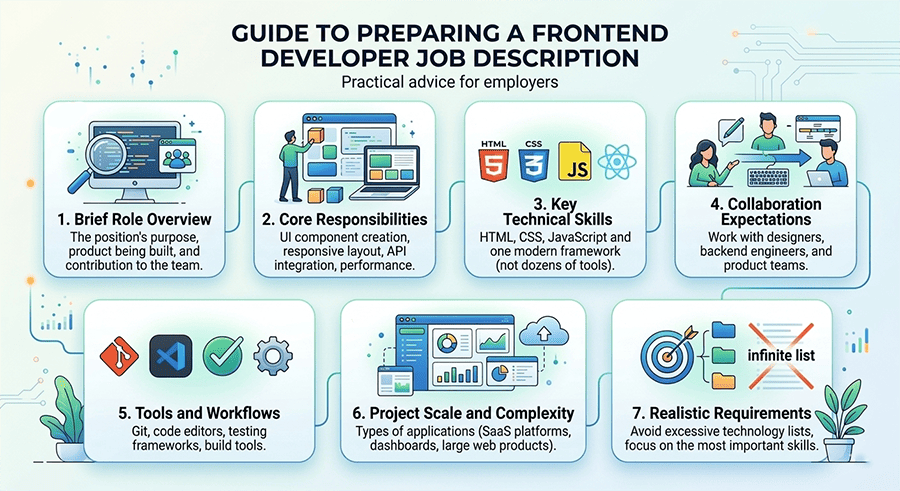
Below are several practical guidelines employers can follow when preparing a frontend developer job description.
-
Start with a clear role overview
Briefly explain the purpose of the position, the product being built, and how the frontend developer contributes to the overall development team. -
Define the core responsibilities of the role
Describe tasks such as building UI components, implementing responsive layouts, integrating APIs, and maintaining application performance and usability. -
List essential technical skills
Focus on key technologies like HTML, CSS, JavaScript, and one modern frontend framework rather than listing dozens of tools. -
Include collaboration expectations
Explain how the developer will work with designers, backend engineers, and product teams to deliver complete product features. -
Mention development tools and workflows
Include tools such as Git, code editors, testing frameworks, and build tools used within the company’s development process. -
Describe project complexity and scale
Provide context about the type of applications being built, such as SaaS platforms, dashboards, or large-scale web products. -
Keep requirements realistic and focused
Avoid excessive technology lists and highlight the most important skills that directly impact the developer’s daily responsibilities.
Front End Developer Job Description Template
When companies start hiring frontend engineers, one of the first challenges is defining the role clearly and consistently. A structured job description helps organizations communicate expectations, responsibilities, and required skills before the hiring process begins. Without a clear template, many job postings become overly generic or include unrealistic requirements that discourage qualified developers from applying. Using a consistent structure ensures that employers highlight the most important aspects of the role while keeping the description easy to understand for candidates.
A good front end developer job description example usually contains several essential sections: a short job overview, a list of responsibilities, required technical skills, and preferred qualifications.
Usefull Front End Developer Job Description Generator for Free
Below is a practical template that companies can adapt when creating a frontend developer job posting. Build a custom front end developer job description in seconds. Select the role level, stack, responsibilities, skills, and benefits, then copy a polished vacancy template.
Basic Information
Responsibilities
Required Skills
Nice to Have
Benefits
The preview updates live as you change fields. Use presets for faster setup, then adjust the final wording.
Live Preview
Ready-to-copy front end developer job description template
A structured template like this allows companies to create consistent job descriptions while making expectations clear to developers applying for the role.
Conclusion
Hiring the right frontend developer begins with writing a clear and accurate description of the role. A well-prepared front end developer job description helps employers communicate the responsibilities, skills, and expectations associated with the position. Instead of listing random technologies, an effective job description focuses on real development tasks such as building responsive interfaces, implementing design systems, collaborating with backend teams, and maintaining performance across modern web applications.
For employers, a structured job description improves the quality of applicants and makes the hiring process more efficient. When responsibilities and requirements are clearly defined, companies are more likely to attract developers whose skills match the needs of the project. This reduces hiring mistakes and helps teams build stronger development environments.
For developers, understanding how a front end developer job description is structured provides valuable insight into industry expectations. It allows candidates to evaluate which skills they need to develop, what tools they should learn, and how frontend roles are typically defined in professional teams.
Ultimately, a clear and well-written job description benefits both sides of the hiring process. Employers gain better candidates, and developers gain a clearer understanding of what it takes to succeed in modern frontend development roles.
Frequently Asked Questions
What skills should beginners learn first if they want to qualify for a front end developer job description?
Beginners who want to qualify for a frontend developer role should start by building a strong foundation in core web technologies. The first skills every aspiring developer should learn are HTML, CSS, and JavaScript. HTML is used to structure the content of a web page, CSS controls layout and visual design, and JavaScript adds interactivity and dynamic behavior to applications. Once these fundamentals are understood, beginners should move on to modern frontend development practices. This includes learning responsive design techniques, understanding how the browser DOM works, and gaining experience with version control systems such as Git. Version control is essential in professional development teams because it allows developers to collaborate and track changes in codebases.
After mastering the basics, developers can begin exploring a modern frontend framework such as React or Vue. Frameworks help developers build scalable applications using reusable components. By combining these skills with practical projects, beginners can gradually build the knowledge expected in a professional frontend developer role.
How can beginners practice real tasks that appear in a front end developer job description?
The most effective way for beginners to practice frontend development is by building real projects that simulate professional development tasks. Instead of focusing only on tutorials, beginners should try to recreate real-world features such as navigation menus, responsive layouts, form validation, or interactive dashboards.
One practical approach is to rebuild existing websites or landing pages. By analyzing how real interfaces are structured, beginners learn how layouts, components, and interactive elements work together. This type of practice helps developers understand how frontend code translates into user-facing functionality. Another useful method is creating small web applications such as task managers, weather dashboards, or simple portfolio websites. These projects introduce important development concepts such as component structure, API integration, and state management. Consistent project-based practice helps beginners gain experience with tasks commonly listed in frontend developer job descriptions and prepares them for real-world development environments.
Do beginners need to learn frontend frameworks before applying for entry-level frontend developer roles?
Learning a frontend framework is strongly recommended for beginners who want to apply for entry-level frontend developer positions. While the core technologies of HTML, CSS, and JavaScript remain essential, many modern web applications rely on frameworks to manage complex interfaces and scalable architectures. Frameworks such as React, Vue, or Angular allow developers to organize their code using reusable components. This structure simplifies large applications and improves maintainability. Because many companies use these frameworks in production environments, they frequently appear in frontend developer job descriptions. However, beginners should not rush directly into frameworks without understanding the fundamentals first. Developers who fully understand JavaScript, browser behavior, and DOM manipulation will learn frameworks much faster and use them more effectively. Once the basics are mastered, learning a single modern framework and building several projects with it can significantly increase a beginner’s chances of qualifying for a frontend developer role.
What types of projects help beginners prepare for a real frontend developer job?
Projects that simulate real product features provide the most valuable experience for beginners. Simple exercises are useful for learning syntax, but employers are more interested in developers who can build complete interfaces and solve practical problems. More advanced projects can include applications that interact with APIs, such as weather dashboards or movie search tools. These projects help developers understand asynchronous JavaScript, data fetching, and UI updates. By building several small but complete projects, beginners demonstrate their ability to implement the types of features that typically appear in frontend developer job descriptions.
How long does it usually take for beginners to become ready for a frontend developer job?
The time required to become ready for a frontend developer role varies depending on the learning approach and the amount of time dedicated to practice. Beginners who study consistently and build projects regularly can develop job-ready skills within several months. The most important factor is not the number of months spent studying but the amount of practical experience gained. Developers who build multiple real projects, understand how to debug problems, and learn how modern frontend tools work are usually better prepared for job interviews. With focused learning, consistent coding practice, and a small portfolio of projects, beginners can realistically prepare themselves for entry-level frontend developer roles.
Others Also Read
- 15 Most Important Skills for a Frontend Developer in 2026 Most popular
- 12 Best AI Tools for Frontend Development in 2026. My opinion Most popular
- How to Become a Front-End Developer in 2026? Most popular
- Complete Frontend Developer Roadmap for Beginners in 2026 New article
- Frontend Developer Career Path New article
- Common Mistakes Beginners Make When Learning Frontend Development New article